How fast would the Earth have to rotate so that it would neutralize gravity?
Asked by: Brad Nelson
Answer
In order to neutralise the acceleration due to gravity the centripetal acceleration needs
to be equal to the acceleration due to gravity:
Centripetal acceleration = 9.81 m/s2
The centripetal acceleration is, a:
a=r x w2
Where r is the Earth's radius (in our case the radius at the equator), and w is the angular
velocity.
Let a = 9.81 m/s2 and r = 6.4 x 10⁶ m
9.81 = 6.4 x 10⁶ x w2
Therefore w = 0.00124 rad/s
This is how fast the Earth would need to rotate to get centripetal acceleration at the
equator equal to 9.81 m/s2.
So if we use this value in this equation:
w = 2/T
Where w is the same as before, the numerator is constant, and T is the time for rotation or
the period.
If we put our value of omega (angular velocity) into the equation we find that T = 5074.99 seconds or 1.409 hours. This
means that the Earth would need to rotate with a period of 1 hour 24 minutes. This means
it would need to rotate approx. 20 times faster than it does now!
Answered by: Dan Summons, Physics Undergrad Student, UOS, Souhampton
'I have deep faith that the principle of the universe will be beautiful and simple.'


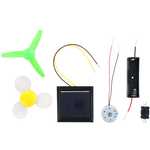
 /T
/T