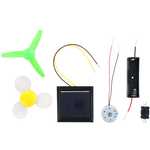
Fan Micro Car DIY STEM Kit
$9.99$5.95

|
|
(German Nickel, Satan or Old Nick's and from kupfernickel, Old Nick's copper) Cronstedtdiscovered nickel in 1751 in kupfernickel (niccolite).
Nickel is found as a constitutent in most meteorites and often serves as one of thecriteria for distinguishing a meteorite from other minerals. Iron meteorites, or siderites, may contain ironalloyed with from 5 percent to nearly 20 percent nickel. Nickel is obtained commerciallyfrom pentlandite and pyrrhotite of the Sudbury region of Ontario, a district that producesabout 30 percent of the world's supply of nicke.
Other deposits are found in New Caledonia, Australia, Cuba, Indonesia, and elsewhere.

 'The true spirit of delight, the exaltation, the sense of being more than Man, which is the touchstone of the highest excellence, is to be found in mathematics as surely as in poetry.'