

Go to Home Page
You are here
Go to Reference Section
Go to Directories Section
Go to Community Section
Go to Fun Section
Go to Science Store
Go to About PhysLink.com
Top Destinations Menu
 Ask the ExpertsAsk the
Experts

 Physics Job BoardPhysics
Job Board

 Physics and Astronomy Departments DirectoryUniversity
Departments

 FREE Einstein eCardsEinstein
eGreetings

 PhysLink.com Science eStoreScience
eStore


Need an interior designer in the Los Angeles area? Visit: Odeau.com


   Question

Is stainless steel magnetic? Does it depend on the amount of chromium, or nickel alloy?

Asked by: James McGuigan

Answer

Stainless steels are a very broad group of metals. The name was adopted as a generic term for steel alloys with a minimum of 10.5% chromium. The chromium gives the steel its 'stainless' properties - essentially corrosion resistance. On the surface of the metal, a very thin chromium-rich oxide layer is formed which is inert - i.e. it prevents the steel from rusting. The advantage of stainless steels over plated steels is that, if scratched or damaged, the steel will 'self-repair' as a new oxide layer is formed. In plated steels, scratches in the plate will often lead to corrosion of the steel underneath.

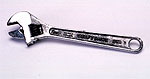
Stainless steel wrenchIn general, the higher the proportion of chromium, the stronger the corrosion resistance of the steel. In addition to chromium, other metals are added to give the steel particular properties such as strength and malleability. Specifically nickel is used to strengthen the oxide layer.


As for whether they are magnetic, the answer is that it depends. There are several families of stainless steels with different physical properties. A basic stainless steel has a 'ferritic' structure and is magnetic. These are formed from the addition of chromium and can be hardened through the addition of carbon (making them 'martensitic') and are often used in cutlery. However, the most common stainless steels are 'austenitic' - these have a higher chromium content and nickel is also added. It is the nickel which modifies the physical structure of the steel and makes it non-magnetic.

So the answer is yes, the magnetic properties of stainless steel are very dependent on the elements added into the alloy, and specifically the addition of nickel can change the structure from magnetic to non-magnetic.

The following company website has a useful high-level definition of the broad stainless steel categories. http://www.parkrow.org/stainless_steel.htm

Answered by: Jules Seeley, M.S., Physics graduate; Strategy Consultant, London.


go to the top  


All rights reserved. © Copyright '1995-'2009 PhysLink.com